special session: human-robot environment interaction design
Dr. Maliheh Ghajargar (maliheh.ghajargar@gmail.com)
Assistant Professor, Department of Geography and Environment, University of North Carolina at Chapel Hill
Maliheh Ghajargar is an HCI/design researcher and assistant professor working at the intersection of AI, creativity, and more-than-human geography. Her research focuses on human-centred AI, human–AI co-creativity, and multispecies design, with particular attention to sustainable and situated data practices. She has served as associate chair for IEEE and ACM conferences (CHI, DIS, TEI) and has organized workshops in conjunction with international conferences such as ACM TEI and ACM IOT conferences.
Hugo Simão (hugalexsimon@gmail.com)
PhD Candidate, Department of Informatics, Science Faculty, University of Lisbon
Hugo Simão is an industrial designer and HCI researcher working at the intersection of human values and social robots. His research examines how people perceive, accept, and negotiate agency, privacy, and social roles with robots and AI agents. He is an invited Professor at IADE, Lisbon. His experience ranges from Co-Publication Chair at DIS 2025, Juror in Design Contests, and Program Committee at HRI Pionners 2025.
as robots increasingly operate outside controlled laboratory and industrial settings [1], this session seeks to expand HRI discourse toward questions of ecological situatedness, care [2], and human-nonhuman coexistence [3].
the special session at The 35th IEEE International Conference on Robot and Human Interactive Communication (RO-MAN 2026), aims to foster interdisciplinary dialogue across HRI [4], design [5], and social sciences [2], encouraging contributions that critically and creatively rethink human–robot relationships [6] in relation to land, water, climate, and living systems [7], [8], [9].
***what do we mean by “environment”?***
In this special session, by environment we mean outdoor and natural ecosystems, such as forests, deserts, mountains, rivers, coasts, agricultural land, wildlife habitats, protected areas, urban parks and “the wild.” We’re interested in robots operating in and with nature, including interactions with animals, plants, fungi, ecosystems, weather, terrain, and diverse ecological contexts.
**When prompted to enter a code during the submission process, please use the special session code: t3x9t.
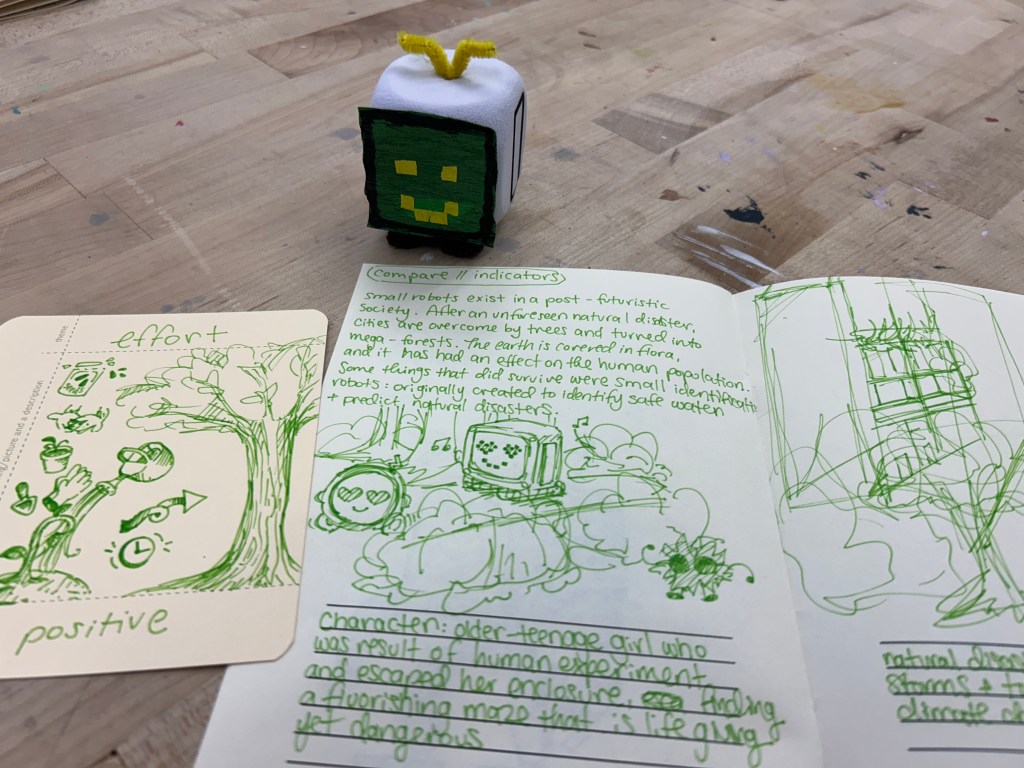
we welcome multiple paper types, including theoretical, empirical, experimental, systems/technical, and RtD work, as well as anything that helps us understand or design human-robot interaction with natural environments. This includes, for example, field deployments, lab studies that are explicitly grounded in a natural setting, design fictions/prototypes, RtD with artifacts, and technical contributions such as sensing, mapping, world models, and representations that let the robot understand what kind of environment it is in and how to behave appropriately. We are especially interested in works where the environment is not a backdrop, but an active constraint and stakeholder, ecologically, socially, and politically.
the themes include, but are not limited to:
robots as ecological actors and mediators
this theme focuses on robots as participants in ecological systems rather than as neutral tools. Contributions may explore how AI and robots mediate relationships between humans and environments—for example, in environmental literacy, restoration, or ecology [8]. Topics include robots as sensing and storytelling agents [10]; robotic interventions that influence human ecological awareness; and design approaches that account for environmental agency, fragility, and temporal rhythms [6]. Works that challenge anthropocentric assumptions and consider robots as actors embedded within multispecies assemblages are particularly encouraged.
tangible and embodied interaction in natural environments
this theme highlights embodied, sensory, and tangible modes of interaction between humans, robots, and environments. Relevant work may explore how robots use sound, touch, movement, or material qualities to foster attentiveness to environmental rhythms such as weather, growth cycles, or animal activity.
ethics, care, and multispecies perspectives in HRI
this theme foregrounds ethical and political questions raised by the deployment of robots in natural environments [11]. Submissions may examine issues of care, responsibility, environmental impact, and power relations among humans, robots, and nonhuman life. Relevant topics include multispecies studies of HRI [12], posthuman and more-than-human perspectives [13], environmental justice, and the risks of technological solutionism in ecological contexts. Work that critically reflects on when not to deploy robots, or that explores refusal, restraint, and alternative futures, is welcome.
design approaches, methods, and processes
the theme invites alternative methodological contributions that explore research-through-design (RtD) [14], fieldwork, and creative practices for studying HRI in natural environments. This includes interactive prototypes, provotypes, installations, storytelling, and artistic interventions that imagine alternative futures for human–robot–nature relations [7]. Such approaches expand what counts as knowledge production in HRI, positioning design and making as critical tools for inquiry.
interdisciplinary areas of interest may inlcude:
_place-based HRI designs. what is a robot for Morocco vs. the Amazon forest? what does a robot “need to be” in different ecosystems and climates? how do terrain, weather, biodiversity, proximity, and infrastructure reshape robot roles, materials, mobility, sensing, resources, and interaction modality and style?
_robots for reading the environment. robots as mediators for environmental awareness, by helping people notice local cues and particularities such as species, disturbances, hazards, microclimates, conservation rules, and invisible changes. this includes robots that teach environmental literacy and awareness through interaction, storytelling or sensing.
_robots as guides and companions in the “wild”. robots for hiking and adventure companions, trail guides, safety partners, or learning companions, supporting navigation, decision-making, pacing, confidence, and shared experience without taking over.
_embodiment and appearance in nature. do we default to anthropomorphic robots in different environments, or should robots blend in, camouflage, or behave like “artificial creatures”? when should robots stand out rather than blend into the landscape? how do environment and ecology shape the robot’s size, materials, feels, motion, sound, light, and presence?
_culture, politics, and governance shape the robot. how do local norms, land rights, conservation policies, indigenous knowledge, environmental justice, and political realities influence what robots are allowed to do, how they should look and behave, and who they ultimately serve?
_important dates
- initial paper submission deadline:
March 15, March 29, 2026 - notification of acceptance: May 29, 2026
- final paper submission: June 20, 2026
_contact: maliheh.ghajargar@gmail.com, hrei.design@gmail.com

_references
[1] H. R. M. Pelikan, B. Mutlu, and S. Reeves, “Making Sense of Public Space for Robot Design,” in Proceedings of the 2025 ACM/IEEE International Conference on Human-Robot Interaction, in HRI ’25. Melbourne, Australia: IEEE Press, Mar. 2025, pp. 152–162. Accessed: Feb. 13, 2026. [Online]. Available: https://dl.acm.org/doi/10.5555/3721488.3721511
[2] K. Winkle et al., “Feminist Human-Robot Interaction: Disentangling Power, Principles and Practice for Better, More Ethical HRI,” in Proceedings of the 2023 ACM/IEEE International Conference on Human-Robot Interaction, in HRI ’23. New York, NY, USA: Association for Computing Machinery, Mar. 2023, pp. 72–82. doi: 10.1145/3568162.3576973.
[3] E. Ahmed, L. D. Cosio, Ç. Genç, J. Hamari, and O. ‘Oz’ Buruk, “Co-Designing Companion Robots for the Wild: Ideating Towards a Design Space,” International Journal of Human–Computer Interaction, vol. 42, no. 3, pp. 1523–1548, Feb. 2026, doi: 10.1080/10447318.2025.2524500.
[4] E. Ahmed, O. ‘Oz’ Buruk, and J. Hamari, “Human–Robot Companionship: Current Trends and Future Agenda,” Int J of Soc Robotics, vol. 16, no. 8, pp. 1809–1860, Aug. 2024, doi: 10.1007/s12369-024-01160-y.
[5] A. Bischof, E. Hornecker, A. L. Krummheuer, and M. Rehm, “Re-Configuring Human-Robot Interaction,” in Proceedings of the 2022 ACM/IEEE International Conference on Human-Robot Interaction, in HRI ’22. Sapporo, Hokkaido, Japan: IEEE Press, Mar. 2022, pp. 1234–1236. Accessed: Feb. 13, 2026. [Online]. Available: https://dl.acm.org/doi/10.5555/3523760.3523990
[6] K. Winkle, “Robots from Nowhere: A Case Study in Speculative Sociotechnical Design and Design Fiction for Human-Robot Interaction,” in Proceedings of the 2025 ACM/IEEE International Conference on Human-Robot Interaction, in HRI ’25. Melbourne, Australia: IEEE Press, Mar. 2025, pp. 1152–1165. Accessed: Feb. 13, 2026. [Online]. Available: https://dl.acm.org/doi/10.5555/3721488.3721637
[7] P. Reynolds-Cuéllar and A. F. Salazar-Gómez, “Nature-Robot Interaction,” in Companion of the 2023 ACM/IEEE International Conference on Human-Robot Interaction, in HRI ’23. New York, NY, USA: Association for Computing Machinery, Mar. 2023, pp. 30–39. doi: 10.1145/3568294.3580034.
[8] J. Dupeyroux, J. R. Serres, and S. Viollet, “AntBot: A six-legged walking robot able to home like desert ants in outdoor environments,” Science Robotics, vol. 4, no. 27, p. eaau0307, Feb. 2019, doi: 10.1126/scirobotics.aau0307.
[9] D. L. Clark, J. M. Macedonia, J. W. Rowe, M. R. Austin, I. M. Centurione, and C. A. Valle, “Galápagos lava lizards (Microlophus bivittatus) respond dynamically to displays from interactive conspecific robots,” Behav Ecol Sociobiol, vol. 73, no. 10, p. 136, Sep. 2019, doi: 10.1007/s00265-019-2732-6.
[10] M. M. V, G. Manikutty, D. Vijayan, A. Rangudu, and B. R. R, “When elephants nodded and dolls spoke: Bringing together robotics and storytelling for environmental literacy,” Dec. 19, 2022, arXiv: arXiv:2212.09313. doi: 10.48550/arXiv.2212.09313.
[11] P. Dauvergne, AI in the Wild: Sustainability in the Age of Artificial Intelligence. Cambridge, Mass: The MIT Press, 2020.
[12] M. Ghajargar, “Tellings of the Pacific Ocean: A Landscape-based Approach for Multispecies Design and HCI,” ACM J. Comput. Sustain. Soc., May 2025, doi: 10.1145/3736651.
[13] R. Wakkary, Things We Could Design: For More Than Human-Centered Worlds. in Design Thinking, Design Theory. Cambridge, MA, USA: MIT Press, 2021.
[14] J. Zimmerman, J. Forlizzi, and S. Evenson, “Research through design as a method for interaction design research in HCI,” in Proceedings of the SIGCHI Conference on Human Factors in Computing Systems, in CHI ’07. New York, NY, USA: Association for Computing Machinery, Apr. 2007, pp. 493–502. doi: 10.1145/1240624.1240704.
 malihehghajargar.com